"Good evening, my lovely little slaves to fate."
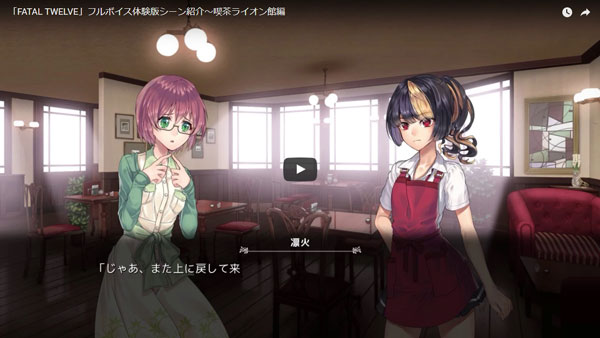
Shishimai Rinka was a highschooler who ran a small café named Lion House in place of her grandmother. She lived her life much like any other person her age, but one day, she was caught up in an explosion while returning home on the train alongside her friend, Hitsuji Naomi. In an attempt to save her friend's life, she shields her on instinct the moment the explosion goes off, losing her life in the process. However, before she knew it, she was back at Lion House, happily chatting with her friends as if nothing had happened in the first place.
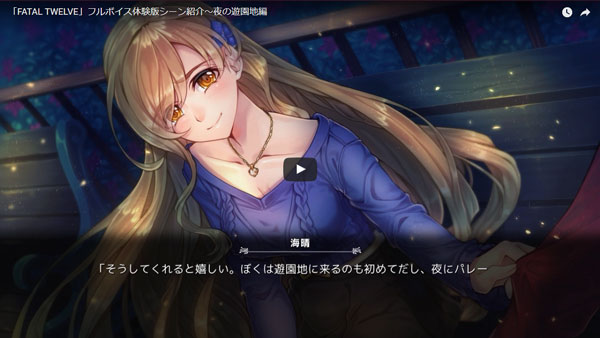
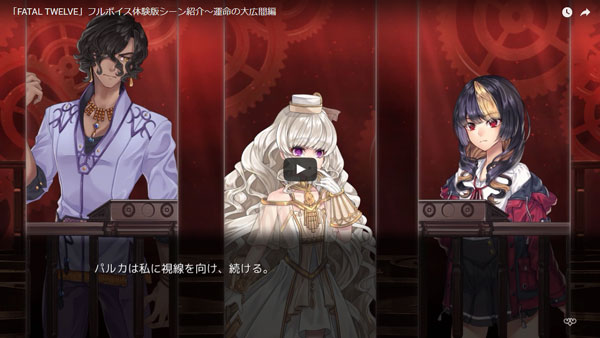
A few days later, she found herself in a strange world. Here she met Parca, an odd girl claiming to be a goddess. It turns out that she had somehow become a participant in Divine Selection, a ritual carried out over twelve weeks by twelve people, which allowed them to compete in order to undo their deaths. What shocked Rinka most of all, however, was the presence of her friend Mishima Miharu amongst the twelve.
In order to make it through Divine Selection, one must eliminate others by gathering information regarding their name, cause of death and regret in the real world, then "electing" them.
This turn of events would lead to her learning about the truth behind her death, as well as her own personal regrets. She would also come to face the reality that Miharu was willing to throw her life away for her sake, as well as the extents to which the other participants would go to in order to live through to the end.
Far more experiences than she ever could have imagined awaited her now, but where will her resolve lead her once all is said and done...?
The emergence of femware script as a significant cybersecurity threat underscores the evolving nature of malicious activities in the digital age. As technology continues to advance, so too will the methods used by malicious actors to exploit vulnerabilities. Understanding the intersection of technology and criminality, as represented by femware scripts, is crucial for developing effective strategies to combat these threats. By working together, we can mitigate the risks associated with femware scripts and ensure a safer digital future for all.
In the rapidly evolving landscape of cybersecurity threats, a new term has emerged that sends shivers down the spines of experts and individuals alike: "Femware Script." This phrase, often associated with malicious activities, represents a growing concern in the digital world. As we delve into the complexities of femware and its implications on modern society, it becomes clear that understanding this phenomenon is crucial for staying ahead of the curve in cybersecurity. Criminality Femware Script--------
Femware, a portmanteau of "female" and "firmware," refers to a type of software that is embedded within devices, controlling their operation. However, in the context of cybersecurity, femware has taken on a more sinister connotation. It is often used to describe malware or scripts that are designed to exploit vulnerabilities in devices, particularly those with a focus on female-oriented or feminist themes. The emergence of femware script as a significant
The rise of femware script highlights the increasingly blurred lines between technology and criminality. As our reliance on digital devices grows, so too do the opportunities for malicious actors to exploit vulnerabilities. The creation and dissemination of femware scripts represent a disturbing trend where technology is used for illicit purposes, often with severe consequences. By working together, we can mitigate the risks
The concept of femware script has been around for several years, but its popularity and usage have surged in recent times. Initially, these scripts were used for relatively harmless pranks or to highlight security vulnerabilities. However, as technology has advanced, so too have the intentions and capabilities of those creating femware scripts.

The emergence of femware script as a significant cybersecurity threat underscores the evolving nature of malicious activities in the digital age. As technology continues to advance, so too will the methods used by malicious actors to exploit vulnerabilities. Understanding the intersection of technology and criminality, as represented by femware scripts, is crucial for developing effective strategies to combat these threats. By working together, we can mitigate the risks associated with femware scripts and ensure a safer digital future for all.

In the rapidly evolving landscape of cybersecurity threats, a new term has emerged that sends shivers down the spines of experts and individuals alike: "Femware Script." This phrase, often associated with malicious activities, represents a growing concern in the digital world. As we delve into the complexities of femware and its implications on modern society, it becomes clear that understanding this phenomenon is crucial for staying ahead of the curve in cybersecurity.
Femware, a portmanteau of "female" and "firmware," refers to a type of software that is embedded within devices, controlling their operation. However, in the context of cybersecurity, femware has taken on a more sinister connotation. It is often used to describe malware or scripts that are designed to exploit vulnerabilities in devices, particularly those with a focus on female-oriented or feminist themes.

The rise of femware script highlights the increasingly blurred lines between technology and criminality. As our reliance on digital devices grows, so too do the opportunities for malicious actors to exploit vulnerabilities. The creation and dissemination of femware scripts represent a disturbing trend where technology is used for illicit purposes, often with severe consequences.

The concept of femware script has been around for several years, but its popularity and usage have surged in recent times. Initially, these scripts were used for relatively harmless pranks or to highlight security vulnerabilities. However, as technology has advanced, so too have the intentions and capabilities of those creating femware scripts.