Specialised edition developed with advice and guidance from the
Thomas Pocklington Trust
Compatible with:
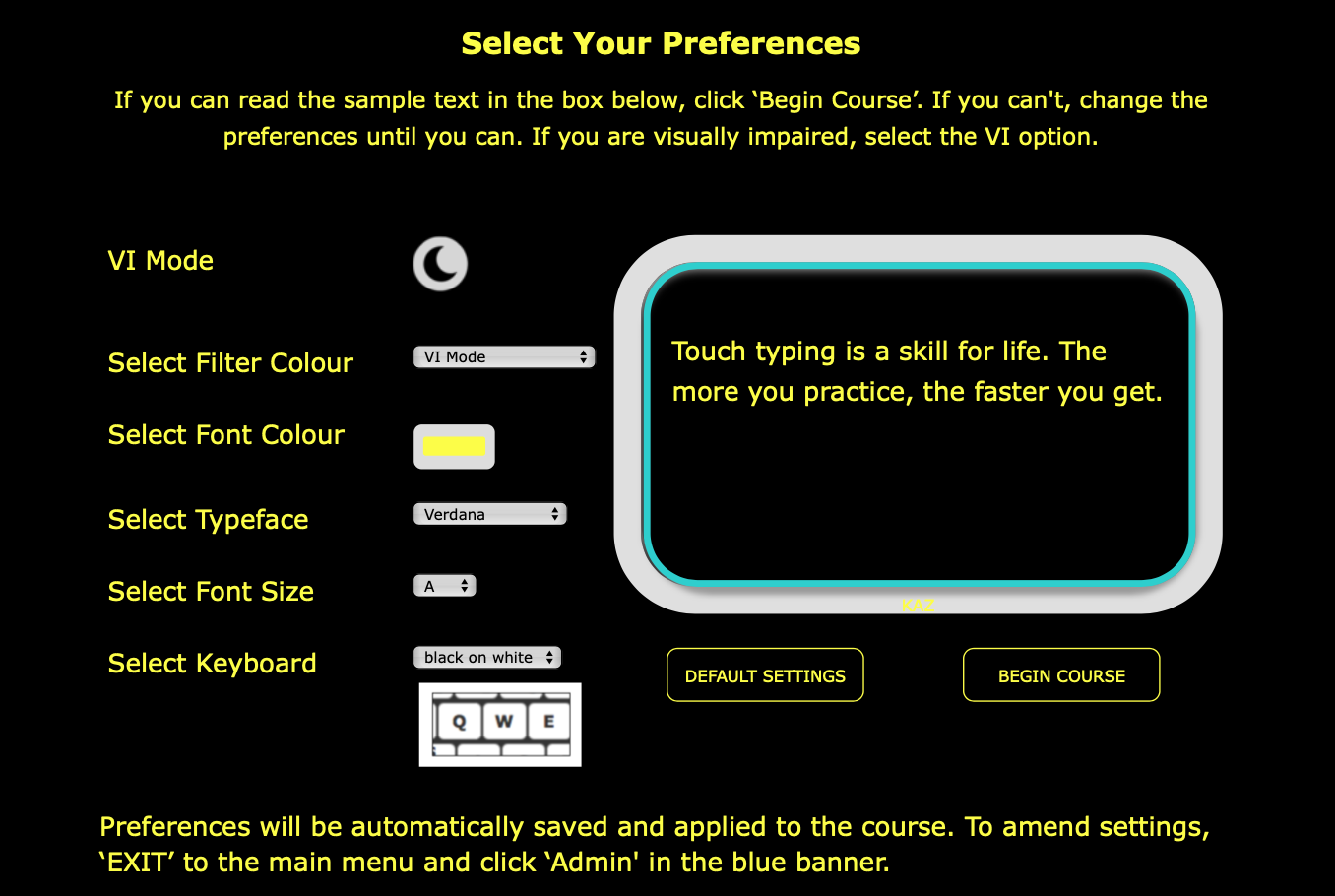
JAWS and other screen readers
Dolphin SuperNova and other magnification software/hardware
Google and other captioning software
Learning to touch type is considered one of the most beneficial skills for visually impaired and blind individuals. This is because it allows them to transfer their thoughts easily and automatically onto a screen. It provides them with an invaluable tool and asset for independent working and communicating.
Learning to touch type at any age can dramatically boost confidence, self-belief and independence. However, teaching learners with visual impairment at an early age can drastically transform their experience whilst at school and in FE/HE. It puts them on a more even standing with their sighted peers and opens doors to new career opportunities.
Achieving muscle memory and automaticity when touch typing increases efficiency and productivity. However, most importantly, it frees the conscious mind to concentrate on planning, composing, processing and editing, greatly improving the quality of the work produced.
Live shopping (pioneered by TikTok Shop and QVC 2.0) blends content and buying. A makeup tutorial is a sales pitch. A video game skin is a fashion statement. Popular media now drives the global economy. When Barbie (the movie) was released, it created a global shortage of pink paint and men’s crocs. The movie wasn't just entertainment; it was a multi-billion dollar merchandising event.
In the digital age, few forces shape human culture, behavior, and even politics as profoundly as entertainment content and popular media . From the silent black-and-white films of the early 20th century to the algorithmic feeds of TikTok and Netflix, the ways we produce and consume stories have undergone a seismic shift. Today, the lines between "entertainment" and "media" are not just blurred—they have completely dissolved.
Furthermore, brands are becoming media companies. Red Bull produces a magazine, a record label, and extreme sports films. Nike runs a fitness app with guided stories. In the future, every corporation will be a publisher of . The Future: AI, Immersion, and Authenticity Looking ahead to the next decade, three trends will define popular media. 1. Generative AI as a Co-Creator We are already seeing AI-written scripts and deepfake cameos (bringing dead actors back to life). Soon, you will be able to generate a personalized movie on the fly: "Netflix, play a rom-com set in ancient Rome where the lead looks like my best friend." This solves the "choice problem" but raises terrifying questions about copyright and human artistry. 2. The Metaverse and Spatial Media While hype has cooled, the shift to immersive 3D content is inevitable. Popular media will escape the rectangle of the smartphone. Imagine walking through a concert in your living room via AR glasses, or attending a press conference where the news anchor is a digital avatar sitting on your couch. 3. The Return of Authenticity As AI floods the zone with "perfect" content, audiences are starving for the real. Ugly, shaky, unedited video (the "lo-fi aesthetic") is rising in popularity. The future of entertainment content is a split: hyper-polished blockbusters on one side, and raw, unfiltered human moments on the other. The middle ground (the standard, generic YouTube video) is dying. Conclusion: Navigating the Infinite Scroll We consume more entertainment content and popular media in a single day than our ancestors did in a lifetime. It is the soundtrack of our lives. But with great volume comes the need for great curation.
As technology accelerates, the most valuable skill will not be the ability to produce the loudest content, but the wisdom to turn off the noise and listen to silence. Nevertheless, for those who master the art, remains the most exciting, dynamic, and influential force on planet Earth. Are you keeping up with the latest shifts in popular media? Subscribe to our newsletter for weekly insights into the intersection of culture, tech, and entertainment.
The key to surviving (and thriving) in this environment is active consumption rather than passive scrolling. Ask yourself: Are you watching the show, or is the algorithm watching you? Are you choosing your popular media, or is it colonizing your attention span?
Free — Karupsow220812espoiroffersherassxxx108
Live shopping (pioneered by TikTok Shop and QVC 2.0) blends content and buying. A makeup tutorial is a sales pitch. A video game skin is a fashion statement. Popular media now drives the global economy. When Barbie (the movie) was released, it created a global shortage of pink paint and men’s crocs. The movie wasn't just entertainment; it was a multi-billion dollar merchandising event.
In the digital age, few forces shape human culture, behavior, and even politics as profoundly as entertainment content and popular media . From the silent black-and-white films of the early 20th century to the algorithmic feeds of TikTok and Netflix, the ways we produce and consume stories have undergone a seismic shift. Today, the lines between "entertainment" and "media" are not just blurred—they have completely dissolved. karupsow220812espoiroffersherassxxx108 free
Furthermore, brands are becoming media companies. Red Bull produces a magazine, a record label, and extreme sports films. Nike runs a fitness app with guided stories. In the future, every corporation will be a publisher of . The Future: AI, Immersion, and Authenticity Looking ahead to the next decade, three trends will define popular media. 1. Generative AI as a Co-Creator We are already seeing AI-written scripts and deepfake cameos (bringing dead actors back to life). Soon, you will be able to generate a personalized movie on the fly: "Netflix, play a rom-com set in ancient Rome where the lead looks like my best friend." This solves the "choice problem" but raises terrifying questions about copyright and human artistry. 2. The Metaverse and Spatial Media While hype has cooled, the shift to immersive 3D content is inevitable. Popular media will escape the rectangle of the smartphone. Imagine walking through a concert in your living room via AR glasses, or attending a press conference where the news anchor is a digital avatar sitting on your couch. 3. The Return of Authenticity As AI floods the zone with "perfect" content, audiences are starving for the real. Ugly, shaky, unedited video (the "lo-fi aesthetic") is rising in popularity. The future of entertainment content is a split: hyper-polished blockbusters on one side, and raw, unfiltered human moments on the other. The middle ground (the standard, generic YouTube video) is dying. Conclusion: Navigating the Infinite Scroll We consume more entertainment content and popular media in a single day than our ancestors did in a lifetime. It is the soundtrack of our lives. But with great volume comes the need for great curation. Live shopping (pioneered by TikTok Shop and QVC 2
As technology accelerates, the most valuable skill will not be the ability to produce the loudest content, but the wisdom to turn off the noise and listen to silence. Nevertheless, for those who master the art, remains the most exciting, dynamic, and influential force on planet Earth. Are you keeping up with the latest shifts in popular media? Subscribe to our newsletter for weekly insights into the intersection of culture, tech, and entertainment. Popular media now drives the global economy
The key to surviving (and thriving) in this environment is active consumption rather than passive scrolling. Ask yourself: Are you watching the show, or is the algorithm watching you? Are you choosing your popular media, or is it colonizing your attention span?