Momxxx 24 08 08 Lady Gang And Maya Rose: Xxx 108 New
Momxxx 24 08 08 Lady Gang And Maya Rose: Xxx 108 New
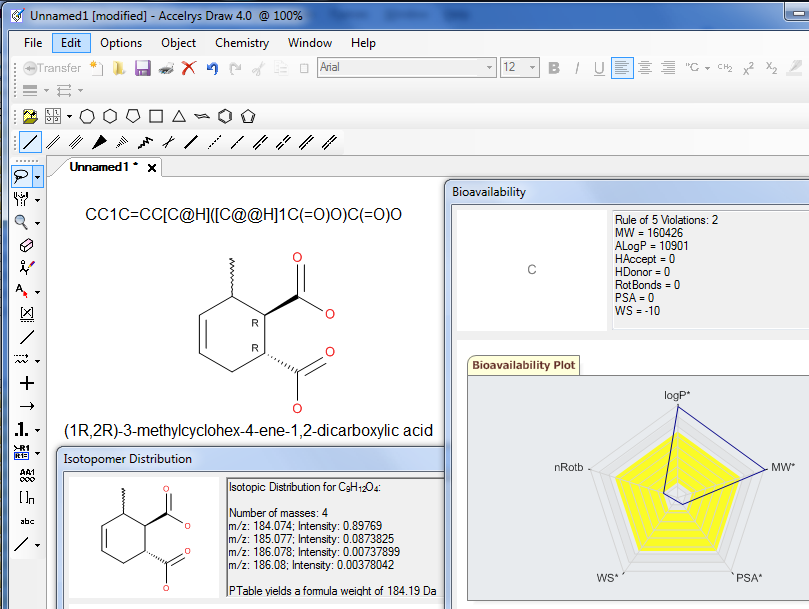 |
With the
same look-and-feel as ISIS/Draw, Accelrys Draw delivers speed and
efficiency to your chemical drawing experience.
Accelrys Draw can easily swap out existing ISIS/Draw or ChemDraw applications. |
|
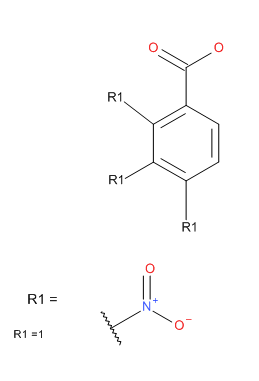
Momxxx 24 08 08 Lady Gang And Maya Rose: Xxx 108 NewClick here for more details about Rgroups, an example, and a detailed procedure how to draw a Markush query. To draw a Markush query:
|
|
|
| Generic Structure
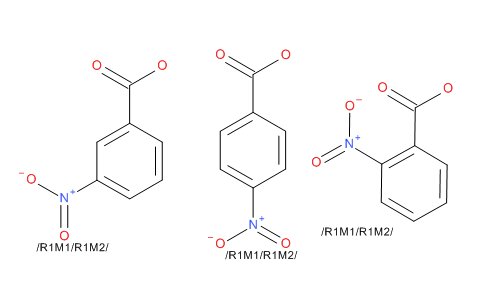
Enumerator The enumerator works against structures defined using the Rgroup tool in Accelrys Draw. In this mode you specify a scaffold with a number of Rgroup labels, then to add fragments to the Rgroup identifiers. The Add-in will calculate the complete set of structures that the Rgroups define. You can also define a generic region using the Sgroup tool. Draw the basic structure and using the Sgroup tool, drag a pair of brackets around a region that is repeated in the substance. From the dropdown select ‘generic’ for the bracket type, then select apply and exit from the dialog. Right click on one of the brackets and select the Attach Data option. In the dialog enter REPEATRANGE into the Field description box, and then enter the range in the Data box; leave the Search Operator set to none; the Tag field is optional. A contiguous range is required in the Data box, for example 3-6. A structure can contain both Rgroup definitions and Sgroup definitions, but they cannot overlap or be nested. You have the option to enumerate on to Accelrys Draw’s canvas, into an SDfile, or into an Isentris for Excel compatible spreadsheet. |
 |
|
Momxxx 24 08 08 Lady Gang And Maya Rose: Xxx 108 NewIn gaming, the industry was mid-transition. The Nintendo Wii was a cultural phenomenon, but the PlayStation 3 and Xbox 360 were competing in the nascent HD era. Spore had just been released, and World of Warcraft: Wrath of the Lich King was two months away. While YouTube existed (founded 2005), it was considered a repository for cat videos and grainy bootlegs. "Influencers" did not exist. The closest analogue was a blogger with a niche readership. Entertainment content on "24 08 08" was professional, polished, and passive. Part 2: August 8, 2024 – The Algorithmic Chaotic Era Now, let us pivot to the most recent "24 08 08" (August 8, 2024). If 2008 was a library, 2024 is a firehose. The keyword "entertainment content and popular media" has been completely redefined. On this day, the boundaries between creator, consumer, and platform have dissolved. The Streaming Wars: The Great Consolidation By August 2024, the streaming market has matured past the "Peak TV" phase (which saw over 600 scripted series in 2022) into a period of austerity. The dominant narrative of August 8, 2024, is the bundling backlash. Disney+, Hulu, and Max are now frequently sold together. Netflix, still the king, has pivoted entirely to algorithmic thumbs-up/thumbs-down metrics, canceling expensive "prestige" shows in favor of global genre hits (reality dating shows from Brazil, K-dramas, and German sci-fi). As we move past this date, the only constant in popular media is that the next "24 08 08" will render this analysis obsolete. And that, paradoxically, is the most entertaining content of all. momxxx 24 08 08 lady gang and maya rose xxx 108 new In the archives of digital culture, certain dates function as seam lines where the fabric of popular media rips, is rewoven, and emerges fundamentally altered. The alphanumeric sequence "24 08 08" — whether read as the twilight of the Broadcast Era (August 24, 2008) or the apex of the Algorithmic Era (August 8, 2024) — serves as a perfect axis point to examine how entertainment content is created, distributed, and consumed. In gaming, the industry was mid-transition However, in the wild west of user-generated content, AI is the star. YouTube is flooded with "deep dive" channels where synthetic avatars read Reddit threads. Spotify features AI-generated "lo-fi chill beats" that are procedurally composed. The question on August 8, 2024, is no longer if AI can create content, but what human-originated content is worth. On August 8, 2024, the highest-grossing entertainment IP is not a film or a network drama; it is a podcast hosted by a former MMA fighter and a comedian (the Joe Rogan model, multiplied tenfold). Popular media is now atomized. A teenager in Omaha has a completely different "top 10" entertainment list than a pensioner in Florida, and both are correct according to their algorithms. Part 3: Comparative Analysis – What Changed Between the Two "24 08 08"s? To truly understand the keyword "24 08 08 entertainment content and popular media," we must place the two dates side-by-side. While YouTube existed (founded 2005), it was considered | Feature | August 24, 2008 | August 8, 2024 | | :--- | :--- | :--- | | | Broadcast/Satellite/Cable | WiFi/5G Streaming & Download | | Content Length | 22-min (sitcom) / 42-min (drama) | 15-sec (Reel) to 10-hour (podcast) | | Gatekeepers | Studio executives, Nielsen families | Algorithms (TikTok, YouTube, Netflix) | | Audience Role | Consumer | Creator/Curator/Commentator | | Business Model | Advertising + DVD sales | Subscription (SVOD) + Microtransactions | | Cultural Moment | Monoculture (everyone knew the Emmy winner) | Polyculture (your algorithm is unique) | The Death of "Appointment Viewing" In 2008, missing the Emmy broadcast meant you were out of the loop. In 2024, if you miss a live event (like the Olympics or the Super Bowl), you will see a vertical clip of the winning moment on X (formerly Twitter) within 60 seconds, set to a viral audio track. The synchronized experience is being replaced by the highlight reel . The Fragmentation of "Popular" In 2008, "popular media" meant the Top 40 radio chart and the weekend box office. In 2024, "popular" is fractal. A niche VTuber (Virtual YouTuber) streaming to 50,000 dedicated fans is considered a mainstream success. The long tail has become the main body. Part 4: The Future Projection – Beyond 24 08 08 If the trend from 2008 to 2024 tells us anything, it is that the velocity of change is increasing. Looking toward the next "24 08 08" (August 8, 2032 or 2040), we can predict three trajectories for entertainment content: 1. Fully Personalized Procedurals By 2030, you will not watch a generic episode of a crime drama. You will input your mood and time constraint, and an AI model will generate a 22-minute episode starring digital likenesses of your favorite actors (with licensing fees paid to their estates). The "content" of 2024—scripted shows—will become a luxury artisan good, akin to vinyl records. 2. The Collapse of the Scroll Audiences on August 8, 2024, are showing signs of "choice paralysis" and fatigue from infinite scrolling. The next evolution of popular media may be a return to curated, lean-back experiences . We are already seeing this with "slow TV" (train journeys, aquarium livestreams) and the nostalgia boom for physical media (VHS, vinyl, DVD). 3. Immersive Spatial Computing With the Apple Vision Pro and Meta Quest 4 entering second-generation maturity, entertainment content is leaving the rectangle. By 2026, "watching a movie" will mean a volumetric capture where you can walk through the set of Barbie or Oppenheimer . The "24 08 08" of the future will be measured not in minutes watched, but in spatial immersion hours. Conclusion: The Semantic Weight of a Date The keyword "24 08 08" is more than a timestamp. For media analysts, it represents a binary star: one light is fading (the broadcast, appointment-based, gatekept media of 2008), and the other is overpowering (the algorithmic, fragmented, AI-augmented media of 2024). |
http://accelrys.com/products/informatics/cheminformatics/draw/add-ins.html | |
Chemical Drawing Programs – The Comparison of Accelrys (Accelrys) Draw, ChemDraw, DrawIt, ACD/ChemSketch and Chemistry 4-D DrawUniversity of Debrecen, POB 70, H-4010 Debrecen, Hungary, e-mail: Last major update : 1.11.2011 If you have any comment, do not hesitate to contact the author at the above adress. |
http://dragon.klte.hu/~gundat/rajzprogramok/dprog.html |