Experts in fire protection

Advantages

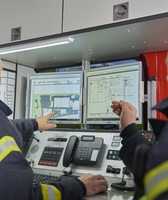
Fire detection and extinguishing control panels process results detected by sensors, control alarm devices and set off alarms to permanently manned stations and the fire department. They continuously monitor extinguishing systems for functionality and trigger them electrically if necessary. In addition, they communicate with risk management systems or via web interface with Internet-enabled devices. Different model versions, from a compact small panel to sophisticated large control panels make it possible to select the appropriate fire detection and extinguishing control panel.

  • Increased functionality
  • Extended message forwarding
  • Communication via open protocols
  • Comprehensive fire control
  • Ease of maintenance
  • International certifications
  • Further information

Siemens Bsm B3 Schematic -

Without the proper schematic, troubleshooting a failed BSM B3 module becomes a guessing game involving high voltages, complex IGBT gate drive circuits, and isolated power supplies. This article provides a deep dive into the architecture, common failure points, and how to leverage the BSM B3 schematic for effective repairs. Before analyzing the schematic, one must understand what the BSM B3 actually is. The BSM stands for Base Driver Module , and the B3 typically refers to a specific generation or current rating class within Siemens Simovert Masterdrives, Sinamics G130, or older DC drive systems.

By studying the five key sections—input conditioning, isolated power, gate output, Desat protection, and status feedback—you gain the ability to troubleshoot down to the component level. Remember to always prioritize safety, use proper isolation, and respect the high voltages present in and around the BSM B3.

Introduction In the world of industrial automation and power electronics, Siemens remains a dominant force. Among its extensive portfolio of drive components, the BSM B3 series of base driver modules stands out as a critical interface between the control logic and the power section of medium to high-performance drives. For repair technicians, field service engineers, and advanced hobbyists, accessing and understanding the Siemens BSM B3 schematic is not just helpful—it is essential.

If you cannot find an official schematic, build your own. Trace the PCB, identify every IC, and cross-reference datasheets. In the world of industrial electronics, the ability to reverse-engineer a module like the BSM B3 transforms you from a part-swapper into a true repair engineer.


Without the proper schematic, troubleshooting a failed BSM B3 module becomes a guessing game involving high voltages, complex IGBT gate drive circuits, and isolated power supplies. This article provides a deep dive into the architecture, common failure points, and how to leverage the BSM B3 schematic for effective repairs. Before analyzing the schematic, one must understand what the BSM B3 actually is. The BSM stands for Base Driver Module , and the B3 typically refers to a specific generation or current rating class within Siemens Simovert Masterdrives, Sinamics G130, or older DC drive systems.

By studying the five key sections—input conditioning, isolated power, gate output, Desat protection, and status feedback—you gain the ability to troubleshoot down to the component level. Remember to always prioritize safety, use proper isolation, and respect the high voltages present in and around the BSM B3.

Introduction In the world of industrial automation and power electronics, Siemens remains a dominant force. Among its extensive portfolio of drive components, the BSM B3 series of base driver modules stands out as a critical interface between the control logic and the power section of medium to high-performance drives. For repair technicians, field service engineers, and advanced hobbyists, accessing and understanding the Siemens BSM B3 schematic is not just helpful—it is essential.

If you cannot find an official schematic, build your own. Trace the PCB, identify every IC, and cross-reference datasheets. In the world of industrial electronics, the ability to reverse-engineer a module like the BSM B3 transforms you from a part-swapper into a true repair engineer.
Applications

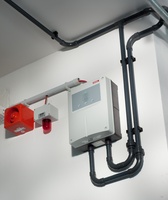
Each version of the FMZ 5000 can be used as a strict fire detection control panel or, combined, as fire detection and extinguishing control panel for water and gas-based extinguishing systems; as a spark detection and spark extinguishing control panel and for all other applications involving instantaneous fire protection, such as machine protection or painting systems. Thanks to an optional redundant hardware, all modular versions can be used to control and monitor multi-zone extinguishing systems and are equally suited to monitoring sprinkler systems.

VdS - Confidence through Safety

Downloads

Fire detection and control panel for spark extinguishing systems SOLID SDE
Brochures (290 kb)
EN DE
Fire detection and extinguishing control panel Mod S
Brochures (892 kb)
EN DE

Related Technologies