Slave Butterfly Tattoo (2026 Edition)
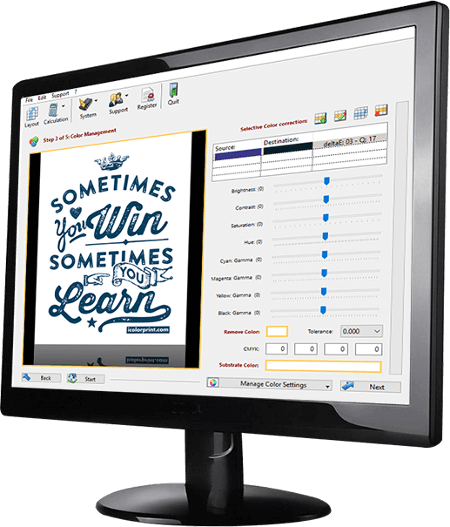
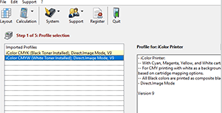
DTF Pro™ has developed a series of software packages to enhance your IColor printing experience. The DTF Pro™ TransferRIP and ProRIP and ProRIP Essentials packages make it simple to produce spot color overprint and underprint in one pass. The Absolute White RIP helps you use an Absolute White Toner Cartridge in a converted CMYK printer, and create 2 pass prints with color and white. The DTF Pro™ SmartCUT suite allows your A4/Letter sized printer to produce tabloid or larger sized transfers! Use one or more with the DTF Pro™ 500, 600 and 800 series of transfer printers.
Use the DTF Pro™ ProRIP software to print white as an underprint or overprint in one pass.
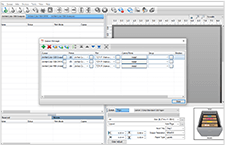
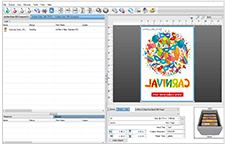
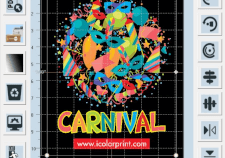
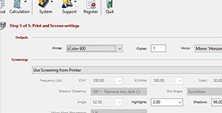
This professional version is designed for higher volume printing with an all new interface. Design files can be printed directly from your favorite graphics program, as well as imported directly into DTF Pro™ ProRIP.
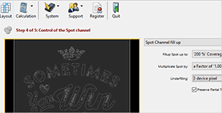
The DTF Pro™ ProRIP software allows the user to control the spot white channel feature. Three cartridge configurations are available: Spot color overprinting, where white is needed as a top color for textiles; Spot color underprinting for printing on dark or transparent media where white is needed as a background color and standard CMYK printing where a spot color is not needed. No need to create additional graphics with different color configurations – the software does it all – and in one pass! Enhance the brilliance of any graphic with white behind color!
Compatible with Microsoft Windows® 8 / 10 / 11 (x32 & x64) only.
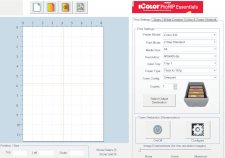
A simplified version of ProRIP which includes all of the most commonly used features of ProRIP with an easy to use interface. This Essentials version simplifies the printing process and allows the user to print efficiently and quickly without any training. All of the important and frequently used aspects of the software are included in this version, while all of the ‘never used’ or confusing aspects of the software are left out.
Comes standard with the IColor®540 and 560 models and is compatible with the IColor 550 as well.
Does not work with IColor 500, 600, 650 or 800 (yet).
Improvements over the ‘Standard’ ProRIP:
You must say more than "I want a slave butterfly tattoo." Say: "I want a metamorphosis piece. I overcame [X]. I want the symbol of a butterfly breaking free from [chains/a cage/a net]. Can we design this without exploiting racial or historical trauma?"
If you or someone you know is currently in a situation of domestic servitude or human trafficking, call the National Human Trafficking Hotline at 1-888-373-7888. slave butterfly tattoo
In the vast and ever-evolving lexicon of body art, few images carry as much weight—or as much controversy—as the slave butterfly tattoo . At first glance, the phrase seems paradoxical. How can a creature synonymous with pure freedom, lightness, and flight be tethered to the harrowing weight of bondage, chains, and subjugation? You must say more than "I want a slave butterfly tattoo
Yet, in the dimly lit corners of tattoo culture, the image persists. It is a design that refuses to be ignored, sparking heated debates among collectors, artists, and historians. For some, it is a deeply personal metaphor for breaking cycles of abuse. For others, it is a relic of outdated aesthetics or a trigger for historical trauma. Can we design this without exploiting racial or
The decline is not due to a lack of trauma survivors. It is due to a collective cultural awakening. Younger generations (Gen Z and Alpha) are moving away from "pain-as-aesthetic" and toward "healing-as-aesthetic." They are getting butterflies without chains, or covering up old slave butterflies with kintsugi-style gold repair lines on the wings—representing repair, not just escape. The slave butterfly tattoo is a high-risk, high-reward piece of body art. When done poorly, it is a cringey, offensive paradox that invites judgment. When done thoughtfully, with a skilled artist and a clear, personal narrative (distinct from racial history), it can be a profound daily reminder of resilience.
This origin is vital. The first gained traction as a symbol of criminal justice survival , not racial slavery. Part III: The Many Meanings – What It Says on Your Skin If you walk into a tattoo shop today and ask for a slave butterfly tattoo , the artist will likely ask you, "What did you overcome?" Here are the most common modern interpretations: 1. Triumph Over Domestic Abuse This is arguably the most common meaning for women and LGBTQ+ individuals seeking this tattoo. The "slave" represents an abusive relationship (physical, emotional, or financial). The butterfly represents the escape. Often, these tattoos include a specific date (the day they left) or have the broken chain lying at the bottom of a floral bouquet. It is a public declaration: I was caged, but I flew away. 2. Recovery from Addiction For those in 12-step programs (AA/NA), the slave butterfly tattoo symbolizes the transition from being a "slave to the substance" to a "sober, liberated self." The chains are often depicted rusting away, representing the slow decay of cravings. The butterfly is often colored bright blue (representing clarity) or purple (recovery royalty). 3. Surviving Human Trafficking This is the most sensitive and raw interpretation. Survivors of sex trafficking or forced labor have reclaimed the term "slave" as a badge of survival, not shame. In this context, the tattoo is a memorial—a public signal to other survivors. The butterfly is often drawn with a cracked wing, signifying that while they escaped, they are not "unbroken." They are scarred, but still flying. 4. Racial and Historical Reclamation (The Controversial Take) A very small, vocal subset of Black Americans have attempted to reclaim the slave butterfly tattoo as a piece of ancestral memorial. The idea: an African butterfly (like the Danaus chrysippus ) with broken iron shackles around its legs. They argue it honors ancestors who died in the Middle Passage—they were enslaved in body, but their souls (butterflies) were free.
DTF Pro™ offers the opportunity of white toner printing for everyday CMYK laser printers – this option is for those that may not be quite ready to make the jump to an IColor Printer.
DTF Pro™’s Absolute White Toner Cartridges allow you to convert your compatible printer into a white toner printer! Simply swap the black cartridge that shipped with the printer and replace with the Uninet Absolute White toner. Print in 100% monochrome for white images and text.
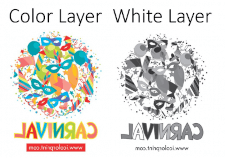
Up until now, printing FULL color images for transfer has been a challenge because you have to design a specific white overprint layer in addition to the color layer, and run the transfer paper through the printer twice, and rely on the printer to line up the images on the same page. Most users only print white image for this reason. This is a tedious process that previously required advanced editing software and knowledge.
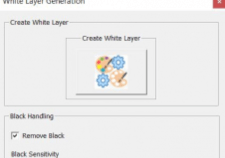
DTF Pro's Absolute White RIP does it all for you! It will analyze a full color image, and then create a matching white layer (with automatic choke) to make 2 pass printing as easy and reliable as possible.
Transfer paper is fed through the printer twice, but all of the manual design work required to do this efficiently is now automated.
A free license is included with all DTF Pro™ Absolute White branded white cartridges (for printers other than IColor), which will have a page count limitation matching the yield of the cartridge purchased. When the page counter depletes, simply purchase a new Absolute White cartridge and the page counter is refreshed.
Use the DTF Pro™ TransferRIP software to print white as an underprint or overprint in one pass.
Designed for every day, short to mid run use, the DTF Pro™ TransferRIP software allows the user to control the spot white channel feature. Two cartridge configurations are available: White overprint, where white is needed as a top color for textiles; and white underprint for printing on dark or transparent media where white is needed a round color. No need to create additional graphics with different color configurations – the software does it all – and in one pass! Enhance the brilliance of any graphic with white behind color!
Compatible with Microsoft Windows 7 / 8 / 10 (x32 & x64) only.